What You’ll Learn
- Japan names milestone anniversaries, from silver at 25 to gold at 50
- The custom came from the West and spread after 1894
- Gold or paired gifts suit a golden anniversary, dictionaries say
- A maneki neko wishes for good fortune in the years ahead
Japanese anniversary gifts follow named milestones: the 25th is ginkonshiki (silver), the 50th kinkonshiki (gold). A meaningful gift carries a wish for the years ahead, such as a maneki neko (招き猫, “beckoning cat”), a ceramic piece or a crane motif.
Japanese dictionaries list a name for many other years as well, from paper to diamond. They also record who hosts the party and what guests bring, down to gold cups and silver spoons.
This guide covers the names, how Japan marks the day and a table of gifts with the wish each one carries. It also shows how to choose a maneki neko for a couple, based on Maneki Neko Lab’s own definitions.
Japanese Wedding Anniversary Names by Year
Japan gives many wedding anniversaries a name ending in -konshiki (婚式, “wedding ceremony”), each tied to a material such as paper, silver or gold. Two of them are known far better than the rest.
Anniversary names in brief
- Ginkonshiki (25 years, silver) and kinkonshiki (50 years, gold) are the most widely known
- Dictionaries list names for many years, from paper to diamond
- The 20th anniversary is porcelain or pottery
Ginkonshiki and Kinkonshiki
Ginkonshiki (銀婚式) marks 25 years of marriage, and kinkonshiki (金婚式) marks 50. The Mypedia encyclopedia notes that silver and gold are the two names most widely known in Japan.
Both words began as translations of the English “silver wedding” and “golden wedding.” The Nihon Kokugo Daijiten, Japan’s largest Japanese dictionary, records each one in print by 1894.
Britannica Japan explains the choice of metal. Gold was chosen for its luster, which does not easily tarnish or change, and silver was named as the metal that ranks next to gold.
So the two milestones carry a clear message. The silver years are worth celebrating, and the golden ones are a bond that has kept its shine.
The Full List in Japanese Dictionaries
Beyond silver and gold, dictionaries list names for about 17 milestones. The table follows Digital Daijisen, a standard Japanese dictionary, with other dictionaries noted where they differ.
Japanese wedding anniversary names
| Year | Japanese name | Material |
|---|---|---|
| 1st | Kamikonshiki (紙婚式) | Paper |
| 2nd | Menkonshiki (綿婚式) or Warakonshiki (藁婚式) | Cotton or straw |
| 3rd | Kawakonshiki (革婚式) or Kusakonshiki (草婚式) | Leather or grass |
| 4th | Shosekikonshiki (書籍婚式) or Hanakonshiki (花婚式) | Books or flowers |
| 5th | Mokukonshiki (木婚式) | Wood |
| 7th | Dokonshiki (銅婚式) | Copper |
| 10th | Suzukonshiki (錫婚式) or Arumikonshiki (アルミ婚式) | Tin or aluminum |
| 15th | Suishokonshiki (水晶婚式) | Crystal |
| 20th | Jikikonshiki (磁器婚式) | Porcelain |
| 25th | Ginkonshiki (銀婚式) | Silver |
| 30th | Shinjukonshiki (真珠婚式) | Pearl |
| 35th | Sangokonshiki (珊瑚婚式) | Coral |
| 40th | Rubiikonshiki (ルビー婚式) | Ruby |
| 45th | Safaiakonshiki (サファイア婚式) | Sapphire |
| 50th | Kinkonshiki (金婚式) | Gold |
| 55th | Emerarudokonshiki (エメラルド婚式) | Emerald |
| 60th or 75th | Daiyamondokonshiki (ダイヤモンド婚式) | Diamond |
Source: Kotobank, “Kekkon kinenshiki”(結婚記念式), “Kamikonshiki”(紙婚式), “Ginkonshiki”(銀婚式), “Kinkonshiki”(金婚式)
The list is not fixed, even between dictionaries. The Nihon Kokugo Daijiten gives paper to the second year in its 1894 example, and it calls the 20th the pottery wedding, tokonshiki (陶婚式).
Mypedia adds that the names differ by era and country. Its British list gives the 40th to emerald, while the 60th is diamond in Britain and the 75th in America.
For a gift, the 20th stands out. Whether a dictionary calls it porcelain or pottery, it is the anniversary named for ceramics.
How Anniversaries Are Marked in Japan
Japan took the anniversary custom from the West in the Meiji era (1868–1912). Today it ranges from a family party for a golden couple to a quiet dinner every year.
How Japan marks the day
- The custom arrived from Europe and spread after an imperial anniversary in 1894
- Children often host the golden anniversary for their parents
- Guests bring gifts linked to gold, or items made as a pair
From Europe to the Imperial Palace in 1894
Dictionaries agree that the custom came from Europe, though they name different starting points. Britannica Japan traces it to England, while the Nipponica encyclopedia says it began in Germany and spread across Europe.
Britannica Japan adds that a mid-19th-century source named only five materials, for the 5th, 15th, 25th, 50th and 60th years. Pearl, ruby and other names came later, helped along by jewelers’ marketing.
In Japan, the first celebration is said to be that of Emperor Meiji and the Empress. They marked their 25th anniversary on March 9, 1894.
The day left one more mark. Japan’s first commemorative postage stamp was issued for that anniversary, and silver and golden weddings then spread to ordinary families.
Source: Kotobank, “Kekkon kinenbi”(結婚記念日, Britannica / Nipponica), “Kinen kitte”(記念切手)
Who Hosts and What Is Given
The host changes with the milestone. Nipponica says a silver party may be hosted by the couple or by their children, while a golden party is most often hosted by children and grandchildren.
How the two main anniversaries are marked
| Milestone | Who hosts | Gifts recorded in Nipponica |
|---|---|---|
| Silver (25 years) | The couple, or their children, friends or students | The couple hands out silver keepsakes, such as silver spoons |
| Gold (50 years) | Mostly children and grandchildren | Guests give items linked to gold, or paired items |
| Gold, in return | The couple | Fukusa cloths, gold spoons or sweets, wrapped as uchiiwai |
For the golden anniversary, Nipponica names lacquerware with gold maki-e, gold sake cups and teacups painted with gold. Maki-e is a lacquer technique that sprinkles gold or silver powder over a design.
Uchiiwai (内祝い) is a gift the celebrating family gives, here a thank-you from the couple. So gifts travel in both directions on the day.
Nipponica also notes that more couples now celebrate every year, sometimes with a party at the 1st or 5th anniversary. November 22, a date read as “good couple” in Japanese, has been promoted as Good Couples Day by a leisure foundation.
Source: Kotobank, “Kinkonshiki”(金婚式, Nipponica), “Ii fufu no hi”(いい夫婦の日)
Anniversary Gift vs Wedding Gift
An anniversary gift follows looser rules than a wedding gift. Money in a goshugi envelope is the usual wedding gift, while dictionaries describe objects, often matched to the year’s material, for anniversaries.
| Point | Wedding | Anniversary |
|---|---|---|
| Usual gift | Money in a goshugi envelope | An object, often tied to the year’s material |
| Who gives | Guests | Children, family and friends, or the couple |
| Theme | A bond that is made once | Years already shared and years to come |
Envelopes, knots and items some people avoid at weddings are covered in our wedding gift guide.
Japanese Anniversary Gift Ideas and the Wishes They Carry
The most fitting Japanese gifts wish for many more years together. Long life, a pair that stays together and the material of the year are the three themes.
Gift ideas in brief
- Cranes and turtles wish for long life together
- Paired items such as meoto-jawan stand for the couple
- A maneki neko beckons good fortune toward the shared home
Gift Ideas, Wishes and the Years They Suit
Each gift below comes with a wish recorded in Japanese dictionaries, or with Maneki Neko Lab’s definition where the dictionaries say nothing.
Japanese anniversary gift ideas
| Gift or motif | Wish it carries | Suits |
|---|---|---|
| Crane and turtle (鶴亀) | Long life, as both animals are thought to live long | The 25th, the 50th and later |
| Tomoshiraga (共白髪) | Growing old together until both have white hair | Any milestone, as a word for a card |
| Meoto-jawan (夫婦茶碗) | Sharing daily meals as a pair of matching bowls | The 20th, the porcelain anniversary |
| Gold maki-e or gold-painted teacups | The golden years, matched to the material | The 50th |
| Silver spoons | Matched to the material | The 25th |
| Maneki neko (招き猫) | Inviting people and good fortune to the home (Lab definition by color) | Any milestone |
Source: Kotobank, “Tsurukame”(鶴亀), “Tomoshiraga”(共白髪), “Meoto-jawan”(夫婦茶碗)
Tomoshiraga is also an object, not only a phrase. The Nihon Kokugo Daijiten describes bundled hemp thread made to look like white hair, given at betrothals and weddings.
Most of these gifts picture the couple or their long life. The maneki neko is the one that faces outward, beckoning guests and good fortune toward the home the two share.
Cranes: A Pair for Life
Cranes suit an anniversary for two reasons, long life and a lasting pair. The saying “a crane lives a thousand years, a turtle ten thousand” has long been used to celebrate long life.
Heibonsha World Encyclopedia adds a fact from nature. A crane pair usually stays together until one of them dies.
That makes a crane motif fit a couple on both counts. Our crane guide covers the saying, folded paper cranes and where to see cranes in Japan.
A Maneki Neko as an Anniversary Gift
A maneki neko suits an anniversary because it looks ahead, inviting people and fortune to a home. Japanese dictionaries describe it as a charm that invites customers and wealth.
A maneki neko for a couple
- The beckoning paw welcomes the years ahead, not only the years past
- Maneki Neko Lab defines gold as wealth and work, pink as love
- Two cats, one right paw and one left, can share a couple’s wishes
Why a Beckoning Cat Suits a Milestone
An anniversary looks back, but a beckoning cat looks forward. It sits at the entrance of the home and welcomes what is still to come.
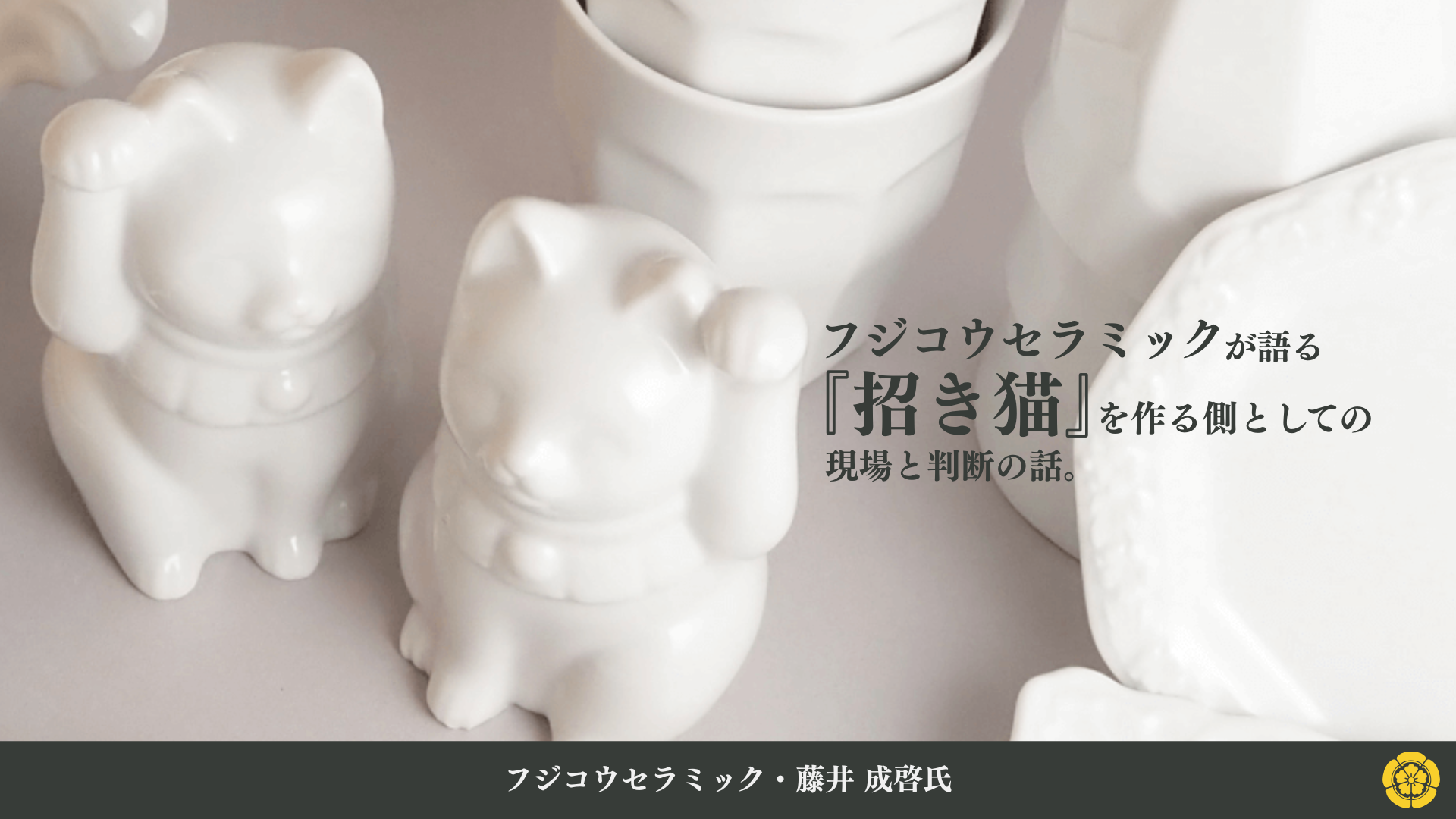
Fujicou Ceramic, a maneki neko maker in Aichi Prefecture, told Maneki Neko Lab about cats it had given. One went to a classmate who had married, and his cat-loving wife was glad to receive it.
The maker described the maneki neko not as a tool that changes a life, but as something handed over quietly at a turning point. Twenty-five or 50 years together is one of those points.
Gold for a Golden Couple, Pink for Love
Maneki Neko Lab’s definitions give each color a wish, so the color can match the anniversary. The table shows the colors that fit a couple.
Maneki Neko Lab’s definitions for an anniversary cat
| Color | Maneki Neko Lab’s definition | Fits |
|---|---|---|
| Gold | Wealth and success at work | A golden anniversary, or a couple still running a business |
| Pink | Love and a good match | A wish for the love to stay young |
| White / Calico | Good fortune of every kind (the basic color for any wish) | Any milestone |
| Green | Health and long life | A wish for many more healthy years |
In our definition, gold invites the flow of money and the rewards of work. For a kinkonshiki, a gold cat also follows the dictionary custom of giving something linked to gold.
Gold’s meaning and how gold cats are made are covered in our gold guide.
Pink stands for love and a good match in the Lab’s definition. Our pink guide explains why the Lab gives pink that meaning.
Two Cats for Two People
In Maneki Neko Lab’s definition, two cats share two wishes between them. One raises the right paw for money, and the other raises the left paw for people.
Maneki Neko Lab’s definition of paws
| Paw | Maneki Neko Lab’s definition |
|---|---|
| Right paw | Money luck (invites money) |
| Left paw | Inviting people (customers and connections) |
| Both paws | Invites both money and people |
A pair set side by side echoes the paired gifts in Nipponica, such as matching teacups. Each partner can also choose the wish of one cat.
No number of cats is lucky or unlucky in our definition. These are standards set by the Lab, not promises of an effect.
If gold suits the milestone, the motif can carry a story too. Nishikigoi (錦鯉, gold) from Luxen Maneki, a brand of Japan ManekiNeko Research Institute, Inc., the company that runs Maneki Neko Lab, is named for the colored koi bred in Japan since the early 19th century. Its gold is hand-painted on Seto ware.
Choosing a Ceramic Anniversary Gift
A good ceramic gift shows where it was made and arrives before the date. The label, the painting, the box and the lead time decide most of that.
Before you order
- Check the country, the pottery town and the maker
- Hand-painting differs slightly from piece to piece
- Allow for made-to-order lead time before the anniversary
What to Check Before You Buy
Check the label, the painting, the box and the lead time. The table sums up what to look for.
What to check on a ceramic anniversary gift
| Point | What to look for | Why it matters for an anniversary |
|---|---|---|
| Label | Country of origin, pottery town, maker | Lets you tell the couple where it came from |
| Painting | Hand-painted, or a printed decal | Hand-painted gold, like maki-e, echoes the golden anniversary |
| Box | A wooden or sturdy gift box | Keeps the piece safe for the years ahead |
| Lead time | Ready-made or made to order | A made-to-order piece needs weeks before the date |
A town name alone does not prove origin. Look for the country and a maker’s name together, then check whether the painting is done by hand.
Kinsai (金彩) is the Japanese word for decorating crafts with gold leaf or gold paint. Our guides explain how ceramic cats are made and how to tell one made in Japan.
Timing, Box and Card
Order early, since made-to-order pieces take weeks before they ship. For a party hosted by children, decide the gift together so the family gives one piece.
Paulownia, or kiri, is the classic Japanese wood for keeping treasures. A paulownia box keeps the gift for the next milestone, and our guide explains the wood.
Add a short card that names the wish. Japanese phrases such as kairo doketsu (偕老同穴), “growing old together,” are traditional words for a lasting marriage.
A ceramic gift often travels to a parent’s home far away, so packing counts. Luxen Maneki ships every piece in a paulownia box, double-packed with cushioning and sent as fragile, with a tracking number, worldwide.
Frequently Asked Questions
Q. Is the 60th wedding anniversary the same as kanreki?
A. No. Kanreki is a person’s 60th birthday, when the zodiac cycle of birth comes back, often marked with something red. The 60th wedding anniversary is the diamond wedding, daiyamondokonshiki. Some dictionaries place the diamond wedding at 75 years instead.
Q. Do Japanese couples give each other anniversary gifts?
A. Many do, and the habit has grown. Japanese encyclopedias note that more couples now mark every year, not only silver and gold. For the big milestones, though, gifts usually come from children, family and friends, and the couple returns thanks with small keepsakes.
Q. Is a ceramic gift bad luck because it can break?
A. In Maneki Neko Lab’s view, no. A ceramic piece is meant to stay in one place for years, and the 20th anniversary is even named for porcelain. The Lab reads a break as an accident, not a sign for the marriage.
Q. What is a good Japanese gift for a 1st anniversary?
A. The 1st anniversary is the paper wedding in Digital Daijisen, so washi paper, a folded crane or a handwritten card fits the material. Some dictionaries give paper to the 2nd year instead, so the theme is a guide, not a rule.
Luxen Maneki, Made by Maneki Neko Lab
An anniversary gift is meant to stay with the couple until the next milestone. That makes it worth knowing where it was made and what it wishes for.
Luxen Maneki is a brand of Japan ManekiNeko Research Institute, Inc., the company that runs Maneki Neko Lab. Its cats are Seto ware, from one of Japan’s six ancient kilns, and artisans at a traditional kiln hand-paint the gold on each one.
Each piece is made to order over about four to six weeks, so order well before the date. It arrives in a paulownia box, and we ship worldwide. Nishikigoi (錦鯉, gold) is joined by Hanaikada (花筏, white) and Ukiyo (浮世, black).
Summary
Japan names its wedding anniversaries by material, and ginkonshiki (25 years) and kinkonshiki (50 years) are the most widely known. The custom came from Europe and spread after the imperial silver anniversary of 1894.
Children often host the golden party, and guests bring gifts linked to gold or made as a pair. Cranes, turtles, paired bowls and tomoshiraga all wish for long life together.
For a maneki neko, the Lab suggests gold for a golden couple and pink for love, or two cats with a right and a left paw. Order early, and add a card that names the wish.

