What You’ll Learn
- A Japanese thank-you gift for a favor is called orei
- A gift back for a present is okaeshi, or uchiiwai for celebrations
- Formal thank-you gifts are wrapped with noshi and a mizuhiki cord
- A white or gold maneki neko suits a thanks meant to last
A Japanese thank you gift is called orei (お礼), and a gift sent back for a present is okaeshi (お返し). When the present marked a celebration, such as a birth or a wedding, the family’s return gift is called uchiiwai (内祝い).
Japanese dictionaries define orei as thanks put into words or into a gift. The gift is usually modest, and a formal one comes wrapped with noshi, a small paper ornament for happy occasions.
This guide explains how the three words differ, why Japan gives something back, and when and how to give. It also covers what to choose, how a maneki neko (招き猫, “beckoning cat”) fits a thank-you, and how to send one from Japan.
Orei, Okaeshi and Uchiiwai: Three Japanese Thank-You Gifts
Japanese has three words for a thank-you gift, set apart by what you are thanking. Orei thanks a favor, okaeshi answers a gift, and uchiiwai shares your own good news with those who celebrated it.
The three words in brief
- Orei: thanks for a favor, in words or a gift
- Okaeshi: a gift sent back for a gift received
- Uchiiwai: a gift from a family to mark its own celebration
Orei: Thanks for a Favor
Orei (御礼) is the word for thanks, and for the gift that carries it. The Digital Daijisen dictionary defines it as expressing gratitude, and also as the words or the present that do so.
The same dictionary defines sharei (謝礼) as words, money or goods that show thanks. Its example is a fee handed to a guest speaker, so orei covers thanks for time and effort as well as for a present.
So an orei needs no gift in the other direction to set it off. Help with a move, a letter of introduction or a week as a guest are all reasons for one.
Okaeshi: A Gift Back for a Gift
Okaeshi (お返し) is a gift sent back to answer one you received. The Digital Daijisen defines the formal word henrei (返礼) as repaying a courtesy or a gift with an act or an item.
Its example is sending local sake in return. The Heibonsha World Encyclopedia lists okaeshi among Japan’s customary gift occasions, next to sharing gifts onward, known as osusowake (お裾分け).
For celebrations and condolences, dictionaries record a rule of thumb called hangaeshi (半返し). The Digital Daijisen defines it as returning about half the value of the money or goods received.
Uchiiwai: Sharing Your Own Celebration
Uchiiwai (内祝い) is a gift a family sends to mark its own happy event. The Digital Daijisen gives two senses, a celebration kept within the family and a gift to close friends in memory of it.
The dictionary adds a usage note. Since uchiiwai comes from the person who had the celebration, saying you will send uchiiwai for someone else’s event is a mistake.
The Nipponica encyclopedia explains how the gift began. Families once invited the whole community to share a meal, and a gift came to stand in for that invitation. Today uchiiwai also serves as thanks for celebration gifts received.
So a new parent sends uchiiwai to those who gave baby gifts. Our baby gift guide covers the celebrations that come before it.
Orei vs Okaeshi vs Uchiiwai at a Glance
The difference comes down to what came first: a favor, a gift or a celebration. The table sets the three side by side.
Orei, okaeshi and uchiiwai compared
| Word | What it thanks | Who gives | Example |
|---|---|---|---|
| Orei (御礼) | A favor, help or a service | The person helped | Thanks to a host or a speaker |
| Okaeshi (お返し) | A gift received | The person who received it | Sweets sent back for a present |
| Uchiiwai (内祝い) | Gifts for your own celebration | The family that celebrated | A return gift after a birth or a wedding |
| Hangaeshi (半返し) | Money or goods at a celebration or funeral | The person who received them | About half the value, sent back as thanks |
Source: Kotobank, “Orei”(御礼), “Henrei”(返礼), “Uchiiwai”(内祝), “Hangaeshi”(半返し)
Okaeshi and uchiiwai often overlap in practice. In Maneki Neko Lab’s reading, uchiiwai is an okaeshi tied to a celebration, sent in the family’s own name.
Why Japan Always Gives Something Back
Japan’s return gifts grew out of sharing food together. Encyclopedias trace the habit to the shared meal, which is why a gift in Japan rarely travels in only one direction.
Why gifts come back
- Gift giving began as eating from one shared pot
- A gift creates a duty to return it
- Even the empty dish goes back with something in it
Gifts Began as a Shared Meal
Nipponica says Japanese gift giving began as a shared meal. Food cooked over one fire and eaten together bound people to each other, and to the gods after a festival.
The Britannica Japan encyclopedia notes that traditional gifts were mostly food, such as summer noodles, a trace of eating together. It also cites the anthropologist Marcel Mauss, who saw gifts as a way to confirm status and relationships.
The Heibonsha World Encyclopedia puts it plainly. A gift, unlike a sale, always creates a duty to give back, and so it strengthens ties between people.
Gifts were frequent too. The same entry cites a survey in Kyoto by the anthropologist Harumi Befu in 1969–70, which found 8.1 gifts a month per household, costing 7.5% of monthly income.
Outsuri: Never Return an Empty Dish
When a neighbor brings food on a plate, the plate goes back with something in it. The Digital Daijisen calls this outsuri (お移り), a small item placed in the giver’s dish or furoshiki as thanks.
The dictionary cites the phrase in James Hepburn’s 19th-century Japanese-English dictionary. Nipponica gives the forms the custom takes, such as leaving a little food in a corner of the dish, or returning it with a sheet of paper or matches.
The Heibonsha World Encyclopedia reads this as a trace of the shared meal. Passing a little food back and forth is a way of eating from the same dish, even at a distance.
Source: Kotobank, “Zoto”(贈答, Nipponica / Britannica), “Utsuri”(移り), “Otame”(オタメ, Heibonsha)
When to Give a Japanese Thank-You Gift
A Japanese thank-you gift follows a favor, a gift or a season. Dictionaries record the main occasions, from summer and year-end gifts to a small present on a visit.
Timing in brief
- Orei follows a favor, okaeshi follows a gift
- Ochugen goes in early to mid July, oseibo in mid to late December
- A short thank-you letter, reijo, can go out first
Occasions for a Thank-You Gift
Each occasion below comes with its own word in Japanese. Choose the one that matches what you are thanking.
Occasions for a Japanese thank-you gift
| Occasion | Japanese word | When |
|---|---|---|
| After a favor or help | Orei (御礼) | Soon after the favor |
| After receiving a present | Okaeshi (お返し) | After the gift arrives |
| After gifts for your own celebration | Uchiiwai (内祝い) | After the birth, wedding or other event |
| Thanks for help through the year, summer | Ochugen (お中元) | Early to mid July |
| Thanks for help through the year, winter | Oseibo (お歳暮) | Mid to late December |
| Visiting someone’s home | Temiyage (手土産) | When you arrive |
| After recovering from an illness | Kaiki iwai (快気祝い) | After a full recovery |
Source: Kotobank, “Ochugen and Oseibo”(お中元とお歳暮, Nihon Bunka Iroha Jiten), “Temiyage”(手土産)
Ochugen and oseibo are gifts for people who look after you all year, according to the Nihon Bunka Iroha Jiten. Temiyage is a small present you carry when you visit someone, defined in the Digital Daijisen.
The thank-you after an illness follows its own customs. Our get well gift guide covers it.
Reijo: The Thank-You Letter
A thank-you often starts with a letter called reijo (礼状), which the Digital Daijisen defines simply as a letter giving thanks. It can arrive before the gift, or stand alone for a small kindness.
Nipponica adds that, between close friends, people sometimes ask what the other would like in advance so gifts do not overlap. That habit makes a short note useful before any gift.
In Maneki Neko Lab’s view, keep the letter short and name the favor. One line on what helped you reads warmer than a long greeting.
Wrapping and Noshi for a Thank-You Gift
A formal Japanese thank-you gift is wrapped with noshi and a mizuhiki cord. The knot and the words on the wrapper change with the occasion.
Wrapping in brief
- Noshi marks a gift for a happy occasion
- A bow knot suits thanks that may come again
- Humble words such as sunshi go on the wrapper
Noshi and Mizuhiki on a Thank-You Gift
Noshi (熨斗) is a folded paper ornament that marks a gift for a happy occasion. Nipponica explains it once held a strip of dried abalone, added to show the gift was not for a Buddhist rite.
Today it is usually printed. The Digital Daijisen defines noshigami (熨斗紙) as paper printed with noshi and mizuhiki, laid over or around a gift.
Mizuhiki (水引) is a stiff paper cord, red and white or gold and silver for happy events. The Digital Daijisen says a bow knot suits celebrations that may repeat, such as a birth, and a knot that cannot be untied suits a wedding.
Source: Kotobank, “Noshi”(熨斗), “Noshigami”(熨斗紙), “Mizuhiki”(水引)
In Maneki Neko Lab’s view, thanks for a favor is something you hope to have reason to give again, so the bow knot fits an orei. Wedding uchiiwai follows the wedding and takes the knot that cannot be untied.
The basics of wrapping and handing over a gift are covered in our gift ideas guide.
Humble Words: Sunshi, Soshina and Kokorozashi
A Japanese giver calls the gift small, even when it is not. The Digital Daijisen defines sunshi (寸志) as a humble word for one’s own gift, written on noshi paper.
The same dictionary defines soshina (粗品) as a humble word for a gift, literally a plain item. Kokorozashi (志) means a gift of thanks or goodwill, as in “hon no kokorozashi desu,” a small token of my feelings.
The modesty is about the giver, not the gift. It puts the weight on the thanks rather than the price.
A furoshiki, a square wrapping cloth, can carry the gift to the door. The Heibonsha World Encyclopedia notes it is now used mostly for gifts and wedding favors.
Source: Kotobank, “Sunshi”(寸志), “Soshina”(粗品), “Kokorozashi”(志)
Japanese Thank-You Gift Ideas
A good Japanese thank-you gift is modest, easy to receive and tied to a wish. Food to share follows the oldest form, while something that lasts keeps the thanks in sight.
Gift ideas in brief
- Food to share follows the roots of gift giving
- Something from your hometown makes a natural temiyage
- A lasting piece, such as ceramics, keeps the thanks in view
Thank-You Gifts and What Each Says
Each idea below comes from Japanese dictionaries or from Maneki Neko Lab’s own view. Choose by how close you are and how long you want the thanks to stay.
Japanese thank-you gift ideas
| Gift | What it says | Suits |
|---|---|---|
| Sweets or food to share | Thanks, shared at the table | Neighbors, colleagues, a host family |
| Something from your hometown | Where you come from | A temiyage on a visit |
| A reijo letter | Thanks in your own words | Anyone, alone or with a gift |
| Ceramics for daily use | Thanks that stays in daily life | A mentor, a host or close friends |
| Maneki neko | Thanks plus a wish for good fortune | A milestone, a new home or a business partner |
Food came first in Japanese gift giving, as Britannica Japan notes. Food is eaten and gone, though, while a lasting piece keeps the giver in mind.
That is why the Lab sees a lasting gift that carries a wish as a fitting thank-you. Our gift ideas guide lists more choices by occasion.
A Maneki Neko as a Thank-You Gift
A maneki neko suits a thank-you because it carries a wish for the person who receives it. Thanks looks back, and the beckoning cat looks ahead.
A maneki neko for thanks
- White stands for good fortune in general in our definition
- Gold stands for money and success at work
- Makers say a maneki neko is handed over in place of words
White and Gold in Maneki Neko Lab’s Definition
For a thank-you, white and gold are the two easiest colors to give. White fits any wish, and gold suits someone who helped with work or business.
Maneki Neko Lab’s definitions for a thank-you cat
| Color | Maneki Neko Lab’s definition | Wish we place in it |
|---|---|---|
| White / Calico | Good fortune of every kind (the basic color for any wish) | May small blessings pile up every day |
| Gold | Wealth and success at work | May your work bear fruit and money flow your way |
In our definition, white can take on any color, so it invites good fortune without choosing a wish. That makes it a safe thank-you when you do not know the person’s wishes.
Gold, like a koban coin, invites the rewards of work and business. For a mentor or business partner, gold turns thanks into a wish for their success.
Handed Over in Place of Words
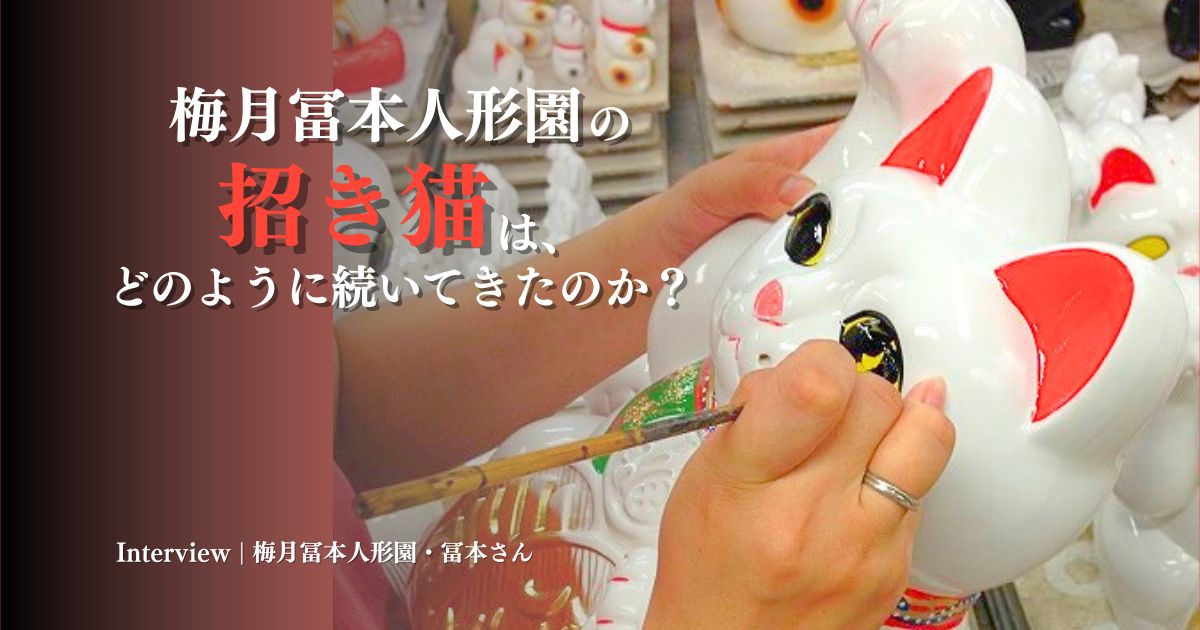
Japanese makers describe the maneki neko as a gift handed over at turning points. Baigetsu Tomimoto Ningyoen, a maker in Tokoname, Aichi Prefecture, told Maneki Neko Lab its cats are often chosen as gifts.
Housewarmings, company anniversaries and new appointments are typical. In those moments, the interview says, the maneki neko has been handed over in place of words.
Fujicou Ceramic, a maker in Aichi Prefecture, shared similar stories with Maneki Neko Lab. Its view is that a maneki neko is not a tool that changes a life, but something passed quietly at a turning point.
A thank-you is that kind of moment. The cat says what is hard to say aloud, and it stays after the words are gone.
Choosing a Maneki Neko That Lasts
A thank-you meant to last should show where and how it was made. The table sums up fair points to check, whatever the maker.
What to check on a ceramic thank-you gift
| Point | What to look for | Why it matters |
|---|---|---|
| Label | Country of origin, pottery town, maker | Lets you tell the recipient where it came from |
| Painting | Hand-painted, or a printed decal | Hand-painting differs slightly from piece to piece |
| Finish | No cracks, chips or warping | A flaw spoils a gift meant to last |
| Box | A sturdy box that protects the piece | The box is part of how the thanks arrives |
| Lead time | Ready-made or made to order | A made-to-order piece needs weeks |
A town name alone does not prove origin. Look for the country and a maker’s name together, then check whether the painting is done by hand.
Our guide to telling a cat made in Japan explains the label in detail.
If you want a thank-you that meets those points, one example is Hanaikada (花筏, white) from Luxen Maneki, a brand of Japan ManekiNeko Research Institute, Inc., the company that runs Maneki Neko Lab. It is Seto ware with gold hand-painted one piece at a time, made to order in Japan.
Thanking a Host Family or a Business Partner
A host family and a business partner call for the same thanks in different forms. Words come first, then a modest gift that fits the relationship.
Two kinds of thanks
- A temiyage on arrival, a letter after you leave
- Tipping is not customary in Japan, according to JNTO
- Business thanks follow the seasons, ochugen and oseibo
Thanking a Host Family
For a host family, a temiyage on arrival and a letter after you leave cover most of the thanks. A temiyage is a small present carried on a visit, as the Digital Daijisen defines it.
Money is not the usual way to say thank you. The Japan National Tourism Organization (JNTO) says tipping is not customary in Japan and suggests a thank-you and a smile instead.
In Maneki Neko Lab’s view, a host family remembers what you shared. A gift from your hometown on arrival, and a reijo with one memory from your stay, say more than an expensive present.
Source: Japan National Tourism Organization, “Japanese Customs and Etiquette”
Thanking a Business Partner
Business thanks in Japan follow the seasons and the milestones. Ochugen and oseibo thank partners for the year, and an orei follows a specific favor.
Our business gift guide covers timing, wrapping and who should not receive a gift.
Sending a Thank-You Gift from Japan
To send thanks abroad, choose a tracked service, pack ceramics firmly and add a card. The card carries what noshi would say in Japan.
Sending in brief
- Japan Post’s EMS sends up to 30 kg to over 120 countries
- Pack ceramics with cushioning on every side
- A short card explains the thanks and the wish
Shipping and the Card That Goes With It
Japan Post’s EMS service sends up to 30 kg to over 120 countries and territories, with tracking (as of November 21, 2026). Rates depend on the destination and weight.
Source: Japan Post, “Express Mail Service (EMS)”
A ceramic piece needs firm packing, since raised paws, ears and rims stick out the most. Import duties depend on the destination, so check whether the recipient may pay on delivery.
Noshi means little outside Japan. In Maneki Neko Lab’s view, a short card naming the favor and the wish lets the thanks travel with the gift.
How a paulownia box protects what is inside is covered in our guide to the wood.
A thank-you sent far away should arrive whole. Luxen Maneki ships every piece in a paulownia box, double-packed with cushioning and sent as fragile, with a tracking number, worldwide.
Frequently Asked Questions
Q. How much should a return gift be in Japan?
A. Japanese dictionaries record a rule of thumb called hangaeshi, returning about half the value of the money or goods received at a celebration or a funeral. It is a guide, not a law. For a thank-you after a favor, no fixed share applies, and a modest gift with a note is enough.
Q. Do I have to return every gift in Japan?
A. Not item for item. Japanese encyclopedias describe a gift as creating a duty to give back, but the return can be a letter, a later favor or a seasonal gift. Between close friends and family, a sincere thank-you often counts as the return.
Q. Should I tip in Japan to say thank you?
A. Usually not. The Japan National Tourism Organization says tipping is not customary and may cause confusion, and it suggests a thank-you and a smile instead. For someone who helped you over days, such as a host, a small gift or a letter fits better than cash.
Q. What is the difference between omiyage and temiyage?
A. Omiyage is a gift brought back from a trip for family, friends or colleagues. Temiyage is a small present carried when you visit someone’s home, as Japanese dictionaries define it. A temiyage often works as an advance thank-you to your host.
Luxen Maneki, Made by Maneki Neko Lab
A thank-you that stays in someone’s home becomes a reminder of what you shared. So it helps to know where the piece was made and how it will arrive.
Luxen Maneki is a brand of Japan ManekiNeko Research Institute, Inc., the company that runs Maneki Neko Lab. Its cats are Seto ware, from one of Japan’s Six Ancient Kilns, with gold hand-painted by artisans at a traditional kiln.
Each piece is made to order over about four to six weeks, so it suits a planned thank-you or a milestone. It arrives in a paulownia box, and we ship worldwide.
Summary
A Japanese thank you gift for a favor is orei, and a gift sent back for a present is okaeshi. When the present marked your own celebration, the return gift is uchiiwai.
The habit grew from sharing one meal, which is why even an empty dish goes back with something in it. A formal gift takes noshi and a mizuhiki cord, and a bow knot suits thanks you hope to repeat.
Choose something modest that fits the relationship, and add a short letter. For a thanks meant to last, a white or gold maneki neko carries a wish along with it.

