What You’ll Learn
- A get-well gift is omimai, the thank-you after recovery kaiki iwai
- Potted plants and the numbers 4 and 9 are customarily avoided
- Food to share, paper cranes and a letter are classic choices
- A red or green maneki neko carries a wish for health
A Japanese get well gift is called omimai (お見舞い), and the return gift after recovery is kaiki iwai (快気祝い). Japanese dictionaries define omimai as a visit, letter or gift that comforts someone who is ill or in trouble.
The two gifts travel in opposite directions. Friends and family give omimai to the patient, and the patient sends kaiki iwai back to them once the illness has passed.
This guide covers what each word means, what Japanese custom avoids and what to give instead. It also explains how a maneki neko (招き猫, “beckoning cat”) fits a wish for health, and how to send a gift to Japan from abroad.
Omimai and Kaiki Iwai: Two Gifts Around an Illness
In Japan, an illness is marked by one gift going in and one coming out. Omimai goes to the patient during the illness, and kaiki iwai comes back after recovery.
The two words in brief
- Omimai: a visit, letter or gift to comfort someone who is ill
- Kaiki iwai: a celebration of recovery, or thank-you gifts from the patient
- Tokoage: putting away the sickbed, a word for full recovery
What Omimai Means
Omimai (お見舞い) is a visit, a letter or a gift that comforts someone in trouble. The Digital Daijisen dictionary gives visiting a sick person as its first example, alongside summer greetings and fire relief.
The custom reaches well beyond illness. The Nipponica encyclopedia lists births, house building, moves, fires, floods and earthquakes as times to call on relatives and neighbors.
The same entry calls these visits a kind of private social safety net. Over generations, they kept ties between relatives, teachers and neighbors alive, and the habit still shapes company life in Japan today.
Source: Kotobank, “Mimai”(見舞い), “Mimai”(見舞)
Food Was the Heart of an Omimai
The oldest get-well gift in Japan was food, meant to be eaten together. Britannica Japan says the center of an omimai gift was food, shared with the patient to give strength.
The Heibonsha World Encyclopedia adds a detail from village life. Until recent times, the patient ate the gift together with the visitor, and a patient too ill to eat still treated the visitor at the bedside.
Nipponica notes that each region once had fixed gifts, such as food or clothing for illness. Over time, the custom shifted toward money, graded by how close the giver was to the patient.
So an omimai was never only an object. It was a reason to sit together and share strength, and that idea still guides a good choice today.
What Kaiki Iwai Means
Kaiki iwai (快気祝い) celebrates a full recovery, often with gifts from the patient. Kaiki (快気) means getting over an illness, and iwai (祝い) means a celebration.
The Digital Daijisen gives two senses. One is celebrating the recovery itself, and the other is the recovered person sending gifts to those who visited during the illness.
The Nihon Kokugo Daijiten, Japan’s largest Japanese dictionary, records the word in James Hepburn’s Japanese-English dictionary of 1867. It describes the gift as a form of uchiiwai (内祝い), a celebration gift sent from the family itself.
Nipponica explains how uchiiwai began. Gifts came to stand in for inviting people to a shared meal, and they also serve as thanks for gifts received.
Source: Kotobank, “Kaiki iwai”(快気祝), “Kaiki”(快気), “Uchiiwai”(内祝い)
Omimai vs Kaiki Iwai at a Glance
The difference comes down to who gives, and when. The table sets the two side by side, with a related word for the end of an illness.
Omimai, kaiki iwai and tokoage
| Word | Who gives | When | What it marks |
|---|---|---|---|
| Omimai (お見舞い) | Family, friends, colleagues | During the illness | Comfort and strength for the patient |
| Kaiki iwai (快気祝い) | The recovered person | After a full recovery | Thanks to those who visited |
| Tokoage (床上げ) | The family | When the sickbed is put away | Recovery after a serious illness or childbirth |
Tokoage means putting away the futon a patient has been lying in. The Digital Daijisen defines it as clearing the bed once strength returns, and also as the celebration held for it.
What Not to Give as a Japanese Get Well Gift
Japanese custom avoids gifts that hint at a long stay in bed. Potted plants and the numbers 4 and 9 are the two best-known cases.
What to avoid in brief
- Potted plants are listed among flowers to avoid for a sick person
- Four sounds like “death” and nine like “suffering”
- Soil and plants in soil cannot be sent into Japan from abroad
Potted Plants
A potted plant is the classic gift to avoid for someone who is ill. A public library case in the Collaborative Reference Database notes that many Japanese etiquette books on get-well visits list flower taboos, such as avoiding potted plants.
Japanese has a near-pun here. Dictionaries define netsuku (寝付く) as falling ill and taking to one’s bed, and nezuku (根付く) as a plant putting down roots.
The two words differ by a single sound. In Maneki Neko Lab’s reading, a plant rooted in its pot pictures the opposite of recovery, for a gift meant to wish a patient out of bed.
The Numbers 4 and 9
Four and nine are numbers Japanese custom avoids because of their sound. Nipponica explains that shi (四, four) sounds like the word for death and ku (九, nine) sounds like the word for suffering.
The same entry records a folk belief that ties four to illness itself. Taking to one’s bed on a day with a four in it was said to bring a long illness.
Digital Daijisen adds that people who avoid the sound of shi read four as yon instead. Nipponica also notes that gifts in Japan have long favored odd numbers such as three, five and seven.
For a patient, Maneki Neko Lab suggests skipping sets of four or nine. Three or five pieces avoid both sounds.
Source: Kotobank, “Imikazu”(忌み数, Nipponica)
What to Avoid at a Glance
Only items with a written basis are listed below. Each comes with the reason recorded in a dictionary or official source.
Things customarily avoided in a Japanese get well gift
| Item | Reason | Basis |
|---|---|---|
| Potted plants | Listed among flowers to avoid for a sick person | Etiquette books noted in a library reference case |
| Sets of four | Shi (four) sounds like death | Nipponica encyclopedia |
| Sets of nine | Ku (nine) sounds like suffering | Nipponica encyclopedia |
| Plants in soil, sent from abroad | Japan bans soil and plants with soil from every country | Plant Protection Station, Ministry of Agriculture |
The last row is a law, not a superstition. It matters most to readers sending a gift from outside Japan, covered in the last section.
What to Give Instead: Japanese Get Well Gift Ideas
Good Japanese get-well gifts carry a wish for strength without adding a burden. Food to share, paper cranes, a charm and a letter all fit that idea.
Gift ideas in brief
- Food to share follows the oldest form of omimai
- Senbazuru, a string of paper cranes, wishes for recovery
- A letter, called mimai-jo, stands in when you cannot visit
Gift Ideas and the Wish Each Carries
Each idea below comes from Japanese dictionaries or from Maneki Neko Lab’s own view. Choose by how close you are and whether you can visit.
Japanese get well gift ideas
| Gift | Wish it carries | Suits |
|---|---|---|
| Food to share | Strength, shared at the bedside | Close family and friends who visit |
| Senbazuru (千羽鶴) | Recovery, folded crane by crane | Classmates or teams giving together |
| Omamori (お守り) for health | Protection, from a temple or shrine | Anyone, small enough to keep close |
| Mimai-jo (見舞状) | Comfort in words | Anyone who cannot visit |
| Maneki neko, red or green | Protection from illness, or health and long life (Lab definition) | A longer recovery at home, or a keepsake after it |
An omamori is a small charm in a cloth pouch, offered for wishes such as health. Our omamori guide explains the kinds and how to keep one.
Senbazuru: A Thousand Paper Cranes
Senbazuru (千羽鶴), a long string of folded paper cranes, is a common gift for the sick. Nipponica explains that cranes are lucky birds, and a thousand of them together was seen as a fortunate sign.
Strings of cranes were once offered at temples and shrines with prayers. Both Nipponica and the Nihon Kokugo Daijiten say that today they are also given to people who are ill.
The Heibonsha World Encyclopedia links the habit to an older idea. Many people join hands to protect one person in danger, and after World War II this grew into folding cranes for recovery.
A library case adds that there is no fixed rule for stringing the cranes, according to an origami book it cites. Our crane guide covers the saying behind the crane and folded cranes in Japan.
Mimai-jo: A Letter When You Cannot Visit
When you cannot visit, a letter called mimai-jo (見舞状) takes the place of the call. Nipponica says sending one is the usual practice when a visit is not possible.
The same entry traces Japan’s New Year cards and summer greeting cards to this habit of visiting by letter. A short note is an omimai in its own right, not a lesser one.
In Maneki Neko Lab’s view, keep the note short and turn it toward the future. Wish the person rest and recovery, and leave out details of the illness.
Source: Kotobank, “Senbazuru”(千羽鶴), “Mimai-jo”(見舞状)
A Maneki Neko as a Get Well Gift
A maneki neko suits a get-well gift because it keeps a wish for health in sight every day. Maneki Neko Lab gives that wish to two colors, red and green.
A maneki neko for recovery
- Maneki Neko Lab defines red as protection from illness
- Green stands for health and long life in our definition
- Place it where the person will see it every day
Red and Green in Maneki Neko Lab’s Definition
Maneki Neko Lab splits the wish for health between red and green. Red keeps illness away, while green holds the wish to grow older in good health.
Maneki Neko Lab’s definitions for a get-well cat
| Color | Maneki Neko Lab’s definition | Fits |
|---|---|---|
| Red | Protection from illness | A wish for the illness to stay away |
| Green | Health and long life | A wish for many healthy years after recovery |
| White / Calico | Good fortune of every kind (the basic color for any wish) | Any occasion, including recovery |
Red has long been held to keep illness away. Ukiyo-e scholar Noriko Okubo told Maneki Neko Lab that the Edo-period smallpox god was thought to dislike red, so many children’s charms were red. Our red guide covers that history.
Green is a color the Lab gave its meaning, drawn from young leaves and growing life. Our green guide explains why it stands for health and long life.
Why a Beckoning Cat Suits Recovery
Most get-well gifts are used up during the illness, but a beckoning cat stays on after it. Food is eaten and cranes mark the hardest days, while the cat keeps sitting in the home.
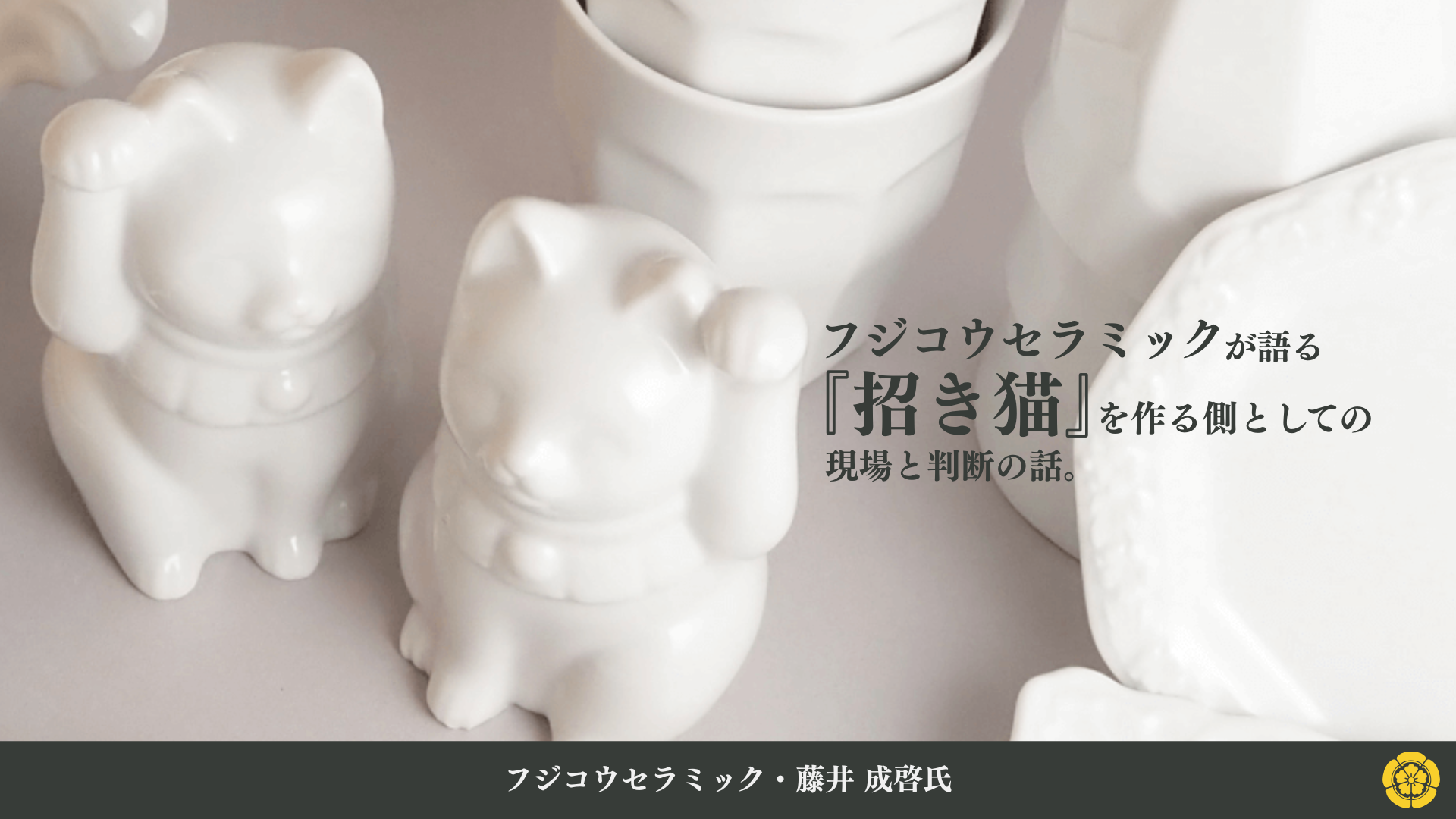
Fujicou Ceramic, a maneki neko maker in Aichi Prefecture, shared stories of cats it had given in an interview with Maneki Neko Lab. The interview sums up its view: a maneki neko is not a tool that changes a life, but something handed over quietly at a turning point.
Recovery is one of those points. In Maneki Neko Lab’s definition, a left paw invites people, so a left-pawed cat can welcome friends and visitors back once the patient is well.
Where the Patient Can Keep It
In Maneki Neko Lab’s definition, a maneki neko goes where its owner sees it every day. For someone resting at home, that may be a bedside shelf rather than the entrance.
A small cat suits that spot. No compass direction is needed in our definition, since directions belong to feng shui, a separate Chinese view.
After recovery, the cat can move to the entrance, the usual place in our definition. Our placement guide explains the reasons.
A cat that stays on after recovery is worth choosing for how it was made. Luxen Maneki, a brand of Japan ManekiNeko Research Institute, Inc., the company that runs Maneki Neko Lab, makes Seto ware cats with gold hand-painted one at a time. Hanaikada (花筏, white) is named for cherry petals drifting together on water.
Sending a Get Well Gift to Japan from Overseas
From abroad, start with a letter, then choose a gift that clears quarantine. Japan’s plant rules shape what you can mail, and a fragile gift needs careful packing.
Sending from abroad in brief
- Soil and plants in soil are banned from every country
- Plants by mail need a certificate and an inspection
- A ceramic gift should arrive boxed, packed and tracked
What Japan’s Plant Quarantine Stops
Japan bans soil and plants with soil, whatever country they come from. The Plant Protection Station of Japan’s Ministry of Agriculture, Forestry and Fisheries states this on its English page.
Plants sent by mail are covered too. The station says plants entering Japan need a phytosanitary certificate from the exporting country and an import inspection, regardless of quantity.
Certain fruits and vegetables are also banned, depending on the country they come from. So buy a fruit basket inside Japan, or leave plants and fresh produce out of the parcel.
Japan’s plant quarantine rules for gifts (as of November 20, 2026)
| Item | Rule |
|---|---|
| Soil, plants with soil | Import prohibited from every country |
| Plants, including by post | Phytosanitary certificate and import inspection required |
| Some fruits and vegetables | Banned depending on the producing country |
Choosing a Ceramic Gift That Travels Well
A ceramic gift sent from far away should show where it was made and arrive safely. The table sums up what to check before you order.
What to check on a ceramic get-well gift
| Point | What to look for | Why it matters |
|---|---|---|
| Label | Country of origin, pottery town, maker | Lets you tell the patient where it came from |
| Painting | Hand-painted, or a printed decal | Hand-painting differs slightly from piece to piece |
| Finish | No cracks, chips or warping | A flaw spoils a gift meant to last |
| Box and packing | A sturdy box, cushioning, tracking | Protects the piece on a long trip |
| Lead time | Ready-made or made to order | A made-to-order piece needs weeks |
A town name alone does not prove origin. Look for the country and a maker’s name together, then check whether the painting is done by hand.
Our guides explain how ceramic cats are made and how to tell one made in Japan.
For a patient far away, the packing decides whether a ceramic gift arrives whole. Luxen Maneki ships every piece in a paulownia box, double-packed with cushioning and sent as fragile, with a tracking number, worldwide.
Frequently Asked Questions
Q. Is money an acceptable get-well gift in Japan?
A. Yes. Japanese encyclopedias note that omimai gifts once followed fixed local customs, such as food or clothing, then shifted toward money over time. The amount was graded by how close the giver was to the patient. Many people now give money, an object or both.
Q. What does tokoage mean?
A. Tokoage means putting away the futon a patient has been lying in. Japanese dictionaries define it as clearing the sickbed once strength returns after a serious illness or childbirth. The word also names the celebration held for that day.
Q. Can I celebrate a friend’s recovery with a gift?
A. Yes. Japanese dictionaries give kaiki iwai two senses, celebrating a recovery and the thank-you gifts the patient sends out. So you can mark the recovery, and the friend may also send kaiki iwai to the people who supported them.
Q. Is a white maneki neko all right for someone who is ill?
A. Yes. In Maneki Neko Lab’s definition, white is the basic color that fits any wish, recovery included. For a gift tied to health alone, the Lab gives red to protection from illness and green to health and long life.
Luxen Maneki, Made by Maneki Neko Lab
A get-well gift that stays after recovery becomes a reminder of the people who cared. So it helps to know where the piece was made and how it will travel.
Luxen Maneki is a brand of Japan ManekiNeko Research Institute, Inc., the company that runs Maneki Neko Lab. Its cats are Seto ware, from one of Japan’s Six Ancient Kilns, with gold hand-painted by artisans at a traditional kiln.
Each piece is made to order over about four to six weeks, so it suits a recovery at home or a celebration after it. It arrives in a paulownia box, and we ship worldwide.
Summary
A Japanese get well gift is omimai, and the return gift after recovery is kaiki iwai. Omimai began as food shared at the bedside, and kaiki iwai thanks those who visited.
Custom avoids potted plants and sets of four or nine. Food to share, paper cranes, an omamori or a short letter carry a wish for strength instead.
For a maneki neko, Maneki Neko Lab gives red to protection from illness and green to health and long life. From abroad, skip plants and soil, and send a gift that is boxed and tracked.

